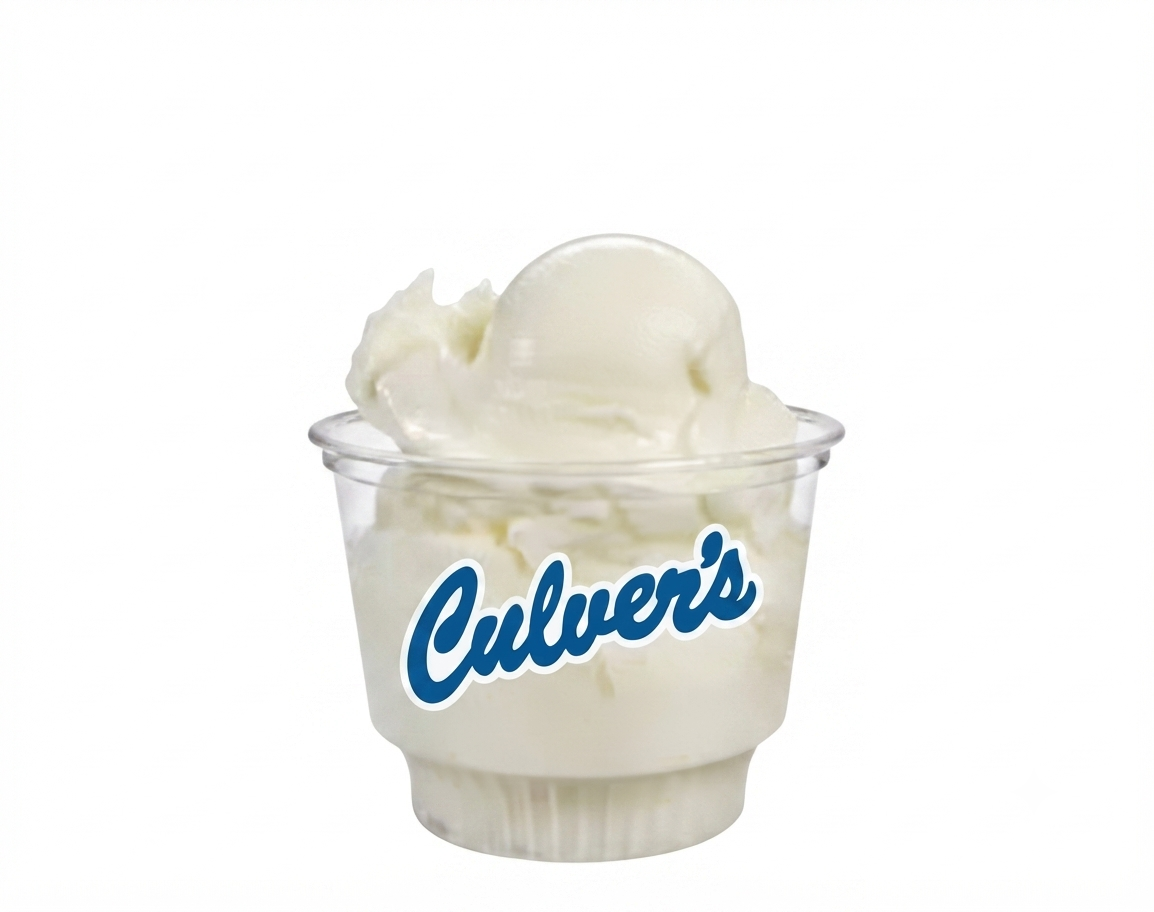
Ask a Culver's regular what keeps them coming back, and the ButterBurger might get the first mention — but Culver's frozen custard is the reason the visit feels complete. This isn't ordinary soft serve or scooped ice cream. It's a denser, richer, creamier dessert with its own identity, made fresh in the restaurant throughout the day. This guide explains what frozen custard actually is, how it differs from ice cream, how Culver's makes it, and how to order it like someone who knows what they're doing. This is an independent guide and is not affiliated with Culver's.
What Is Frozen Custard, Exactly?
Frozen custard looks like ice cream's close cousin, and in many ways it is — but a few key differences set it apart. The most important is the recipe: frozen custard contains egg yolks in addition to the cream, milk, and sugar you'd find in ice cream. Those yolks do real work. They add richness, create a smoother and silkier texture, and give the finished custard a slightly deeper color and a more luxurious mouthfeel.
The second difference is air. All frozen desserts contain some air — it's what keeps them scoopable instead of turning into a solid block. Ice cream can legally contain quite a lot of it. Frozen custard, by contrast, is churned with significantly less air, which makes it denser. Pick up a scoop of custard and a same-sized scoop of ice cream and the custard will feel heavier. That density translates directly to flavor: less air means more custard per spoonful.
The third difference is serving temperature. Frozen custard is served slightly warmer than typical hard-scooped ice cream. That might sound like a minor detail, but temperature has a huge effect on how we perceive flavor. Served a touch warmer, the custard's flavors come through more vividly instead of being muted by extreme cold.
The result is a dessert that's richer, denser, and more intensely flavored than standard ice cream — and once you've had good frozen custard, regular soft serve can taste a little thin by comparison.
How Culver's Makes It Fresh Throughout the Day
Here's where Culver's really separates itself. The custard isn't shipped in frozen, made weeks ago at some distant plant, and scooped from a tub. It's made fresh in the restaurant, in small batches, throughout the day.
The process starts with the custard mix, which is poured into a specialized machine that churns and freezes it simultaneously. Churning while freezing is what keeps the texture smooth — it prevents large ice crystals from forming and works in that characteristic density. Because it's done in small batches rather than massive production runs, each batch gets proper attention.
"Throughout the day" is the key phrase. Instead of making one giant batch in the morning and serving it for twelve hours, the restaurant makes fresh batches as needed. That means the custard you get at 7 PM was likely churned not long before you ordered it. Freshness at that level is simply not something you can get from a pre-packaged product.
You can taste the difference. Fresh-churned custard has a softness and immediacy to its flavor that fades with time, even under perfect storage. It's the dessert equivalent of bread from a bakery oven versus bread from a bag — same general idea, completely different experience.
Vanilla and Chocolate: The Everyday Classics
Every Culver's serves vanilla and chocolate custard every day, and they're worth appreciating on their own terms rather than treating them as the "boring" options. The vanilla is rich and eggy in the way good custard should be — this is not the pale, bland vanilla of cheap ice cream. The chocolate is deep and satisfying without being overly sweet.
These two flavors are also the foundation for most of the menu's treats. Shakes, malts, sundaes, and concrete mixers typically start with vanilla or chocolate as the base, so their quality matters enormously. A concrete mixer is only as good as the custard it's blended from, and Culver's built its reputation on getting the base right.
If you're a custard newcomer, starting with a simple dish of vanilla is genuinely good advice. It lets you taste what the fuss is about without any distractions. Think of it as calibrating your palate before you explore the wilder options.
Sundaes, Cones, and Dishes: The Classic Formats
The simplest way to enjoy the custard is also one of the best. Cones and dishes let the custard speak for itself, and they're the most affordable way to get your fix — typically just a few dollars.
Sundaes build on that foundation with toppings. Hot fudge, caramel, strawberry, and similar classics are the usual suspects, often with whipped cream, nuts, and a cherry if you're feeling traditional. A hot fudge sundae made with fresh chocolate custard is one of the great simple desserts in fast food — the temperature contrast between the warm fudge and the cool custard is doing a lot of the heavy lifting, and it works beautifully.
Dish versus cone is mostly a matter of personal preference and mess tolerance. Cones add a nice textural contrast and keep things portable; dishes are neater and better for sundae-style builds. There's no wrong answer, though regulars tend to have strong opinions.
Concrete Mixers: The Main Event
If sundaes are the classics, concrete mixers are the showpieces. A concrete mixer starts with fresh custard and blends in your choice of mix-ins — candies, cookies, nuts, fruit, sauces — until the whole thing reaches a thick, spoonable consistency. The name comes from the texture: properly made, it's so thick you could theoretically turn the cup upside down.
The mix-in menu is extensive. Crushed cookies and candy bars are the crowd-pleasers, fruit and sauces offer lighter options, and nuts add crunch and richness. You can combine multiple mix-ins, and the staff will blend them thoroughly so every spoonful has a bit of everything.
Ordering strategy matters here. Two mix-ins is the sweet spot for most people — enough variety to be interesting without turning into chaos. Chocolate-based mix-ins pair naturally with chocolate or vanilla custard, while fruit mix-ins tend to shine brightest against vanilla. And if the Flavor of the Day catches your eye, getting it as a concrete mixer with a complementary mix-in is a power move.
Fair warning: concrete mixers are rich. They're a full dessert experience, not a light snack. Plan accordingly — or don't, and accept the delicious consequences.
Shakes, Malts, and Floats
The drinkable side of the custard menu deserves its own appreciation. Shakes made with fresh custard are thicker and richer than standard fast-food shakes — you'll want a wide straw and a little patience. Malts add malted milk powder for that old-fashioned soda-fountain flavor that many people remember fondly and younger diners are discovering for the first time.
The root beer float might be the sleeper hit of the entire dessert menu. Instead of vanilla ice cream, it's made with fresh custard, and the combination of fizzy root beer and dense, creamy custard is genuinely special. If you've only ever had floats made with regular ice cream, the custard version will recalibrate your expectations.
These are also the most portable custard options — easy to take in the car, which matters when the craving hits away from the restaurant.
Mix-Ins and Toppings: Building Your Perfect Treat
The topping and mix-in selection is where personal expression enters the picture. The standard lineup covers the classics: hot fudge, caramel, butterscotch, strawberry, crushed cookies, candy pieces, nuts, and fruit. Seasonal and special options rotate through as well.
A few combinations have earned classic status among regulars. Hot fudge and pecans on vanilla is timeless. Crushed cookies blended into chocolate custard is a crowd-pleaser for a reason. Fresh strawberry with vanilla custard in summer is simple perfection.
But the real joy is experimentation. The staff has seen every combination imaginable, so don't be shy about asking for something unusual. Some of the best custard experiences come from ignoring the obvious pairings and following your instincts.
Frequently Asked Questions
What is the difference between frozen custard and ice cream?
Frozen custard contains egg yolks, which ice cream typically doesn't, giving it a richer flavor and silkier texture. It's also churned with less air, making it denser, and it's served at a slightly warmer temperature so the flavors come through more vividly.
Is Culver’s frozen custard made fresh daily?
Yes. Culver's makes its custard fresh in the restaurant in small batches throughout the day, rather than serving pre-made product. That's why the texture and flavor are noticeably fresher than typical scooped desserts.
What is a concrete mixer?
A concrete mixer is fresh frozen custard blended with your choice of mix-ins — candies, cookies, nuts, fruit, or sauces — until thick. It's served in a cup and eaten with a spoon, and it's one of the most popular items on the dessert menu.
What flavors of custard does Culver’s have?
Vanilla and chocolate are served every day. Beyond that, each restaurant offers a rotating Flavor of the Day — a special flavor made fresh for one day only, published on a monthly calendar that varies by location.
Is frozen custard gluten-free?
Plain vanilla and chocolate custard are typically made without gluten-containing ingredients, but cross-contact in the kitchen is possible, and toppings or mix-ins may contain gluten. If you have celiac disease or a serious sensitivity, ask the restaurant directly about their current practices.
How should I store leftover custard?
Honestly, fresh custard is best eaten immediately — its texture is at its peak right after churning. If you must save some, get it into a freezer as quickly as possible in a sealed container, but expect the texture to firm up and lose some of its fresh-churned magic.
Conclusion
Culver's frozen custard earns its devoted following through a simple formula: a richer recipe with egg yolks, less air for density, and small batches churned fresh throughout the day. Whether you keep it classic with a vanilla dish, go indulgent with a loaded concrete mixer, or chase the Flavor of the Day, you're getting one of the best frozen desserts in fast food. The only real mistake is skipping it. Craving custard now? Order now and treat yourself — you've earned it.