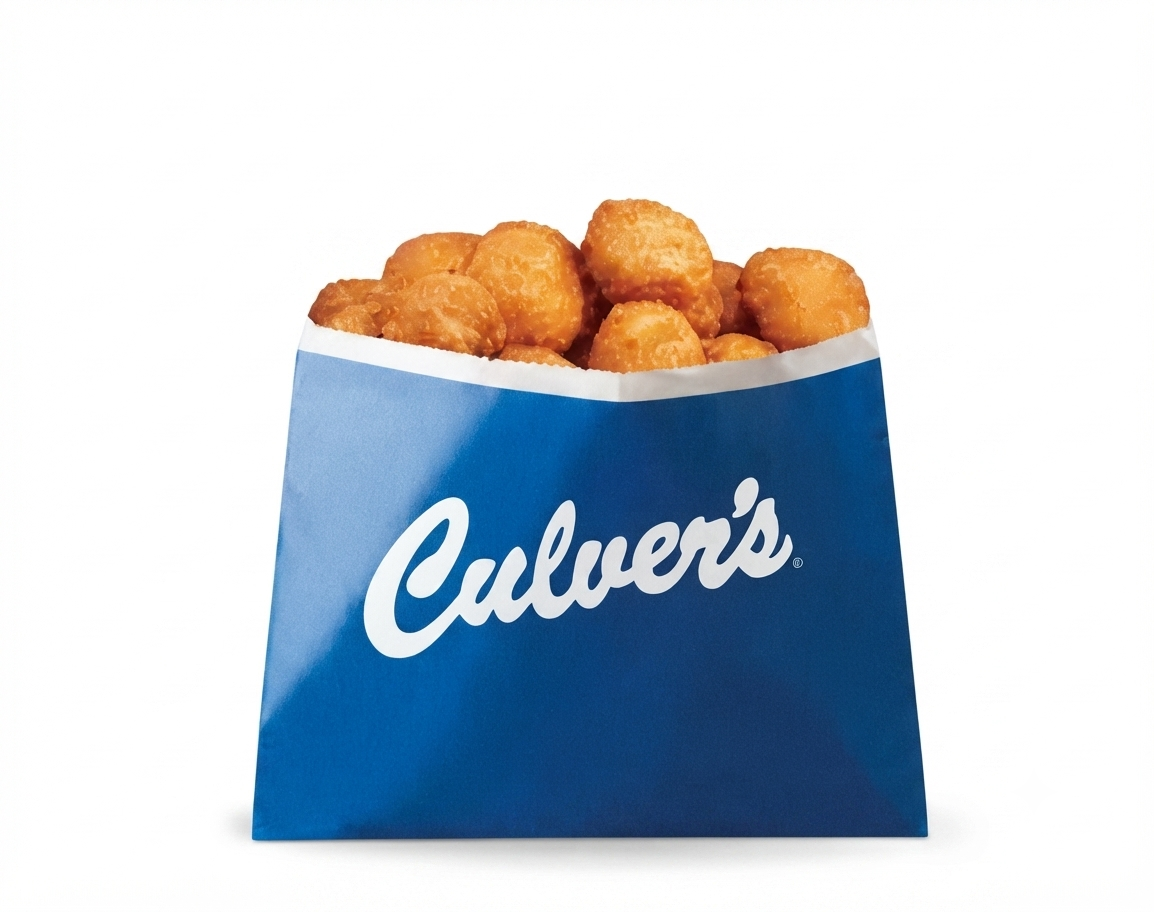
Every great restaurant has a signature side dish, and at Culver's, that dish is the cheese curd. Culver's cheese curds are golden, crispy, molten-centered bites of Wisconsin dairy pride — and for many diners, they're the menu item that turns a first visit into a lifelong habit. Whether you've never tried a cheese curd in your life or you're a Midwest native with strong opinions about the squeak, this guide covers what they are, what they taste like, how to order them, and the best sauces for dipping. This is an independent guide and is not affiliated with Culver's.
What Are Cheese Curds, Anyway?
To understand the fried version, you have to start with the fresh version. Cheese curds are the solid pieces that form during the cheese-making process, before the curds are pressed into blocks and aged into the cheddar you know. In Wisconsin — the undisputed cheese-curd capital of America — fresh curds are a beloved snack in their own right, famous for the distinctive "squeak" they make against your teeth when they're truly fresh.
Fresh curds are mild, milky, and springy, with a clean dairy flavor. They're the raw material. But at Culver's, the curds get the full treatment: they're coated in a seasoned breading and fried until golden brown. The heat transforms them — the outside turns shatteringly crisp while the inside melts into a gooey, stretchy center. It's the contrast between that crunchy shell and the molten middle that makes them irresistible.
If you've never had a cheese curd before, the closest comparison is probably a premium mozzarella stick — but that undersells it. The curds are smaller, the cheese has more character, and the breading-to-cheese ratio hits differently. One order tends to convert skeptics quickly.
The Wisconsin Connection
Cheese curds aren't just a menu item at Culver's — they're a statement of identity. Culver's was founded in Wisconsin, and the curds are a direct nod to the state's dairy heritage. Wisconsin produces more cheese than any other state, and cheese curds are woven into the local food culture the way barbecue is woven into the South's.
This matters because authenticity counts with regional foods. A cheese curd at a random chain can feel like a novelty item; at Culver's, it feels like home cooking. The restaurant sources real Wisconsin cheese curds, and that provenance is part of the appeal. When Midwesterners move away and get homesick, the curds are often what they miss most — they're edible nostalgia.
Even if you have no Wisconsin roots, the regional connection adds something to the experience. You're not just eating a fried snack; you're participating in a food tradition. And it's a delicious one.
What Do They Taste Like?
Let's get specific about the sensory experience, because "fried cheese" doesn't quite capture it.
The first thing you notice is the crunch. The breading fries up golden and crisp, with a seasoned flavor that goes beyond plain breadcrumbs — there's a savory depth that suggests herbs and spices without overwhelming the cheese. It shatters pleasantly when you bite in, which is exactly what you want from anything fried.
Then comes the cheese. The interior is hot, melty, and stretchy, with a mild but distinct cheddar flavor that's richer than what you'd get from a standard mozzarella stick. Because curds start as young cheese, they have a fresh, milky quality even when melted — less sharp than aged cheddar, more flavorful than plain mozzarella. It's a Goldilocks cheese: not too mild, not too aggressive.
Temperature is critical. Cheese curds are at their absolute best in the first few minutes after frying, when the center is fully molten and pulls into those satisfying cheese strings. As they cool, the cheese firms up and the magic fades. This is a food with a short peak window, and regulars know to start eating immediately. If your order arrives at the table, the curds come first — everything else can wait thirty seconds.
An order is also more filling than it looks. Cheese is calorie-dense, and a full order of curds is a substantial snack. They're often described as a side dish, but a large order can honestly function as a light meal, especially for smaller appetites. Plan accordingly — or embrace the indulgence.
How They're Made: Breaded and Fried to Order
The preparation is straightforward but executed with care. Real Wisconsin cheese curds are coated in a seasoned breading, then fried to order until the exterior is golden brown and crisp. "To order" is doing important work in that sentence — the curds hit the fryer after you order them, not before.
This matters enormously for a food whose peak window is measured in minutes. Curds that have been sitting under a heat lamp are a shadow of their fresh-fried selves: the breading softens, the cheese sets, and the contrast that makes them special disappears. The to-order frying is why Culver's curds have the reputation they do.
The frying itself is a balancing act. Too short and the breading is pale and the cheese isn't fully melted; too long and the breading darkens while precious cheese starts escaping into the oil. Getting it right consistently, hundreds of times a day, is a genuine kitchen skill — and it's one of the quiet reasons the curds are so reliably good.
Sauce Pairings: What to Dip Them In
Cheese curds are excellent on their own, but the right dipping sauce elevates them further. The classic pairing is marinara — the bright acidity of tomato sauce cuts through the richness of the fried cheese beautifully, and it's the default choice for good reason. If you're only going to try one sauce, make it marinara.
Ranch is the other heavyweight contender. Cool, creamy, herby ranch against hot, crispy curds is a combination that needs no explanation. It's the comfort-food pairing, the one that feels inevitable from the first dip.
Beyond the big two, there's a whole world to explore. Honey mustard brings sweet tang that plays nicely with the savory breading. Barbecue sauce adds smoky sweetness. Some diners swear by buffalo-style hot sauce for a spicy kick, and the contrast between fiery sauce and molten cheese is genuinely thrilling.
The pro move is to get two sauces and alternate. The variety keeps your palate engaged through the whole order, and you'll discover your personal favorite through direct comparison. There's no wrong answer — only delicious research.
Cheese Curds vs. Other Sides
How do the curds stack up against the rest of the side menu? It depends on what you're after.
Crinkle-cut fries are the classic pairing with a ButterBurger — salty, crispy, familiar, and excellent for sharing. They're also lighter and less filling than curds, which matters if custard is in your future. Fries are the safe, versatile choice.
Onion rings offer a different kind of crunch with a sweet-savory profile. They're a solid pick but don't inspire the devotion that curds do.
The curds are the indulgent choice — richer, more filling, more of an event. They're what you order when you want the meal to feel special, or when someone at the table has never tried them and needs an introduction. Many regulars alternate: fries with the burger most visits, curds when the craving strikes.
For first-timers, the honest recommendation is to get the curds. You can get fries anywhere; properly fried Wisconsin cheese curds are a Culver's signature. Try the signature first, then explore.
Fun Facts About Cheese Curds
Every great food has lore, and cheese curds are no exception. Here are a few things worth knowing.
The famous "squeak" of fresh cheese curds is real, and it's actually a freshness indicator. The squeak comes from the curds' springy protein structure rubbing against your teeth, and it fades within a day or so as the curds age. By the time curds are fried, the squeak is gone — but its existence is why Wisconsinites are so particular about freshness.
Cheese curds are one of the freshest cheese products you can buy. Because they're unaged, they go from milk to snack faster than just about any other cheese. That freshness is part of their mild, milky flavor profile.
October is often celebrated as a big month for cheese curds in Wisconsin food culture, and fried curds are a staple at state fairs across the Midwest. The fair version and the Culver's version share DNA, but the restaurant version benefits from consistent technique and to-order frying.
Finally, there's an ongoing friendly debate about the ideal curd size. Too small and they're all breading; too large and the center doesn't melt evenly. Culver's landed on a size that regulars seem happy with, which is all the market research that matters.
Ordering Tips
A few practical notes will improve your curd experience. First, as mentioned, eat them immediately. This is the single most important rule. If you're doing takeout, the drive home is the enemy — consider eating a few in the parking lot as a quality-control measure. (Quality control is important.)
Second, consider the order size carefully. Curds are rich, and what looks like a modest portion can be surprisingly filling. When in doubt, start smaller — you can always order more, but you can't un-eat a curd.
Third, think about the full meal. Curds plus a double ButterBurger plus custard is a heroic amount of food. There's no shame in getting a single patty or splitting the curds when the rest of your order is ambitious.
Fourth, ask about sauces proactively. Don't assume your preferred dip will just appear — request what you want when you order so everything arrives together.
Frequently Asked Questions
What are Culver’s cheese curds made of?
They're made from real Wisconsin cheese curds — the fresh, unaged curds formed during cheddar cheese-making — coated in a seasoned breading and fried to order until golden brown and crispy outside with a melty center.
What do cheese curds taste like?
The breading is golden, crispy, and savory; the inside is hot, melty, and stretchy with a mild, milky cheddar flavor. The contrast between the crunchy shell and the gooey center is what makes them special. They're best eaten within minutes of frying.
What sauce goes best with cheese curds?
Marinara is the classic pairing — its acidity cuts through the richness — and ranch is a close second. Honey mustard, barbecue sauce, and buffalo-style hot sauce are all popular alternatives. Getting two sauces and alternating is a favorite strategy.
Are cheese curds the same as mozzarella sticks?
Not quite. While both are fried cheese, curds are smaller, made from young Wisconsin cheddar-style curds rather than mozzarella, and have a distinct breading and flavor. Most people who try both consider curds the more interesting of the two.
How many calories are in an order of cheese curds?
Cheese curds are one of the richer, higher-calorie sides on the menu — fried cheese is indulgent by nature. An order is quite filling for its size. For specific numbers, check the nutrition information at your local restaurant, since recipes and portions can vary. Prices and nutrition information may vary by location.
Can I get cheese curds to go?
Yes, but eat them as soon as possible. The peak window for fried curds is just a few minutes after cooking — the breading stays crisp and the cheese stays molten. For takeout, many fans do a quick quality-control taste in the parking lot.
Conclusion
Culver's cheese curds are more than a side dish — they're a taste of Wisconsin dairy culture, fried to golden perfection and served at their molten best. Crispy outside, gooey inside, and endlessly dippable, they've earned their status as a menu legend. If you haven't tried them yet, your next visit is the time. Ready to experience the hype firsthand? Order now and make sure the curds are the first thing you eat — trust us on this one.